 Premium Plans

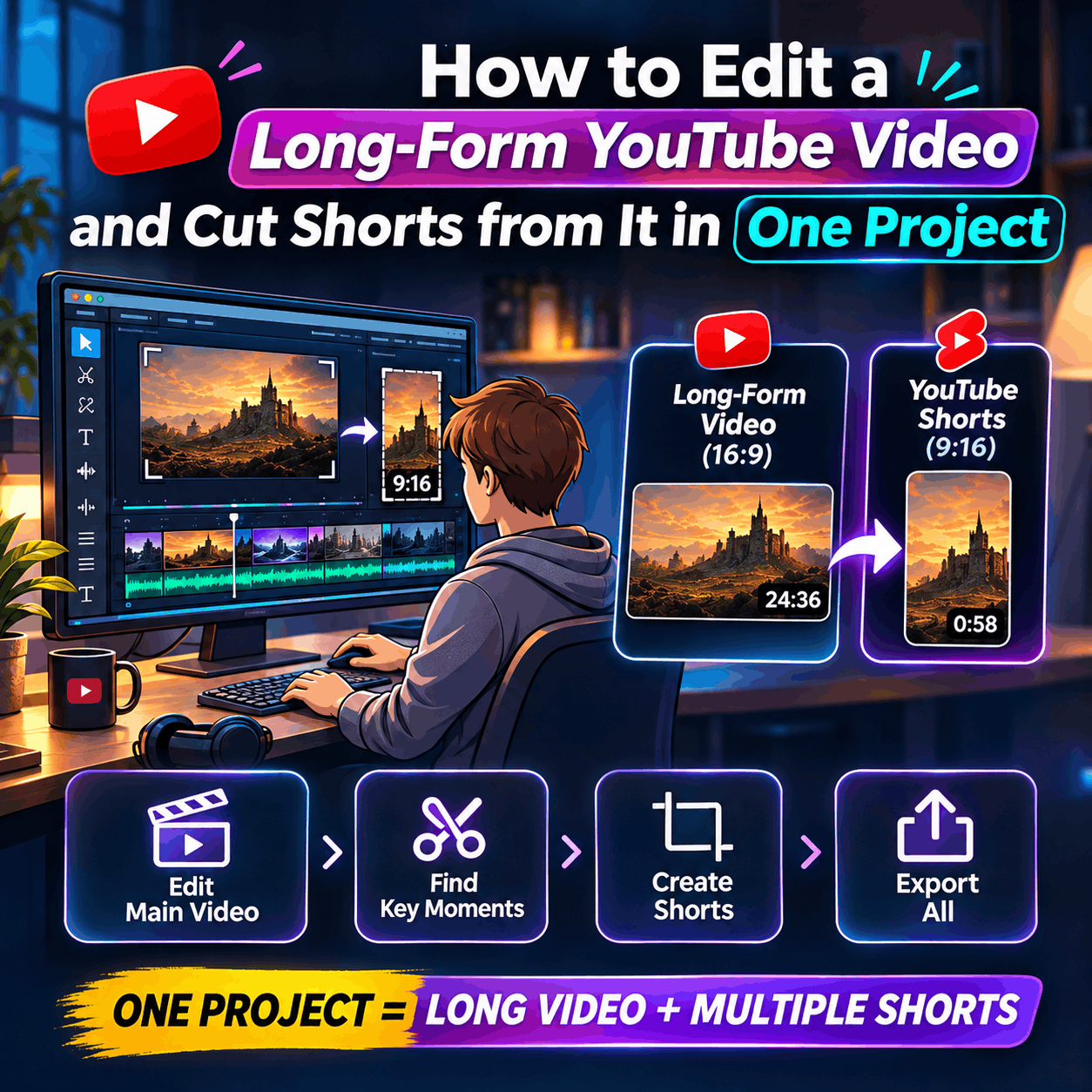
How to Edit a Long-Form YouTube Video and Cut Shorts from It in One Project
How to Edit a Long-Form YouTube Video and Cut Shorts from It in One Project
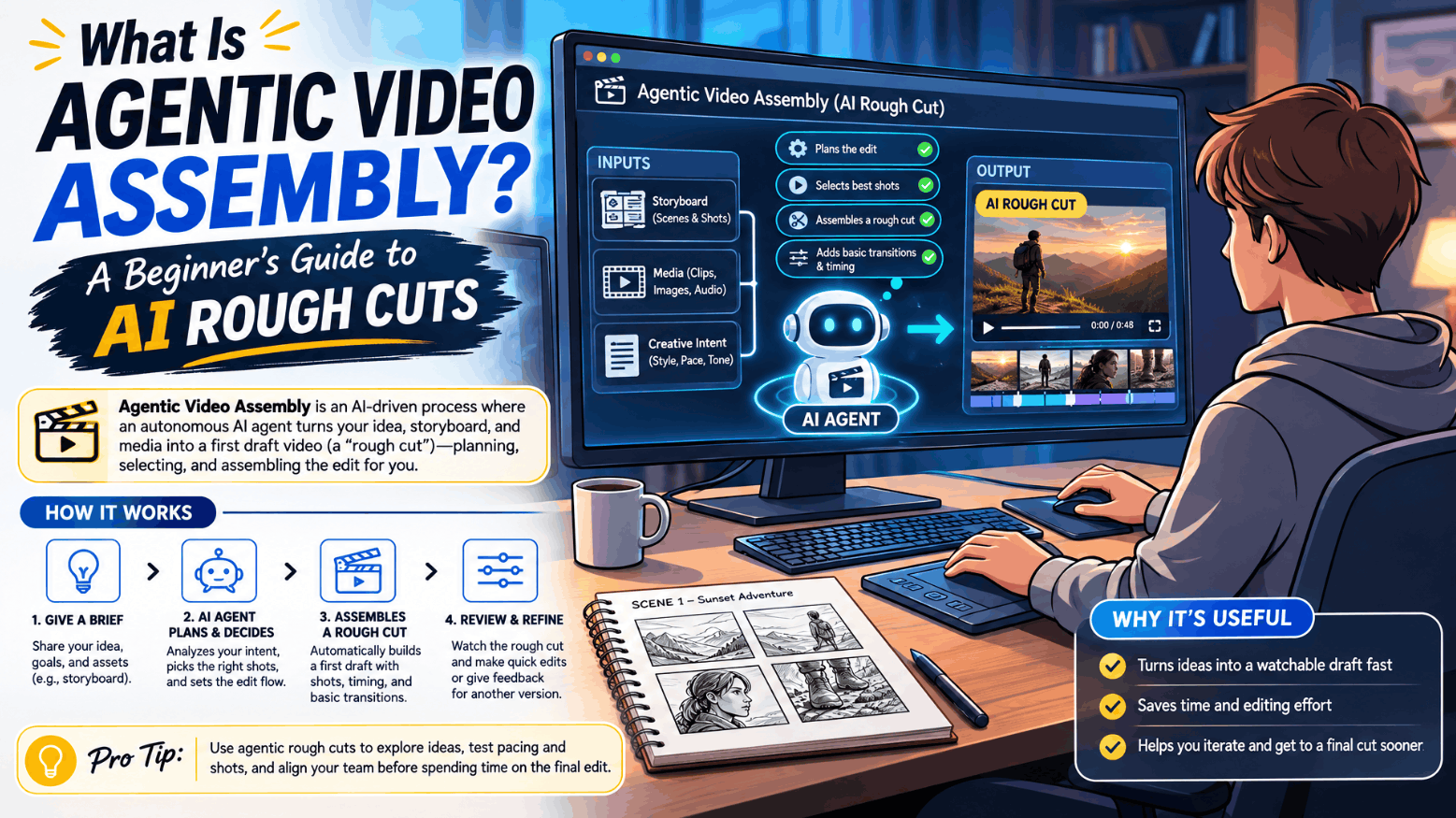
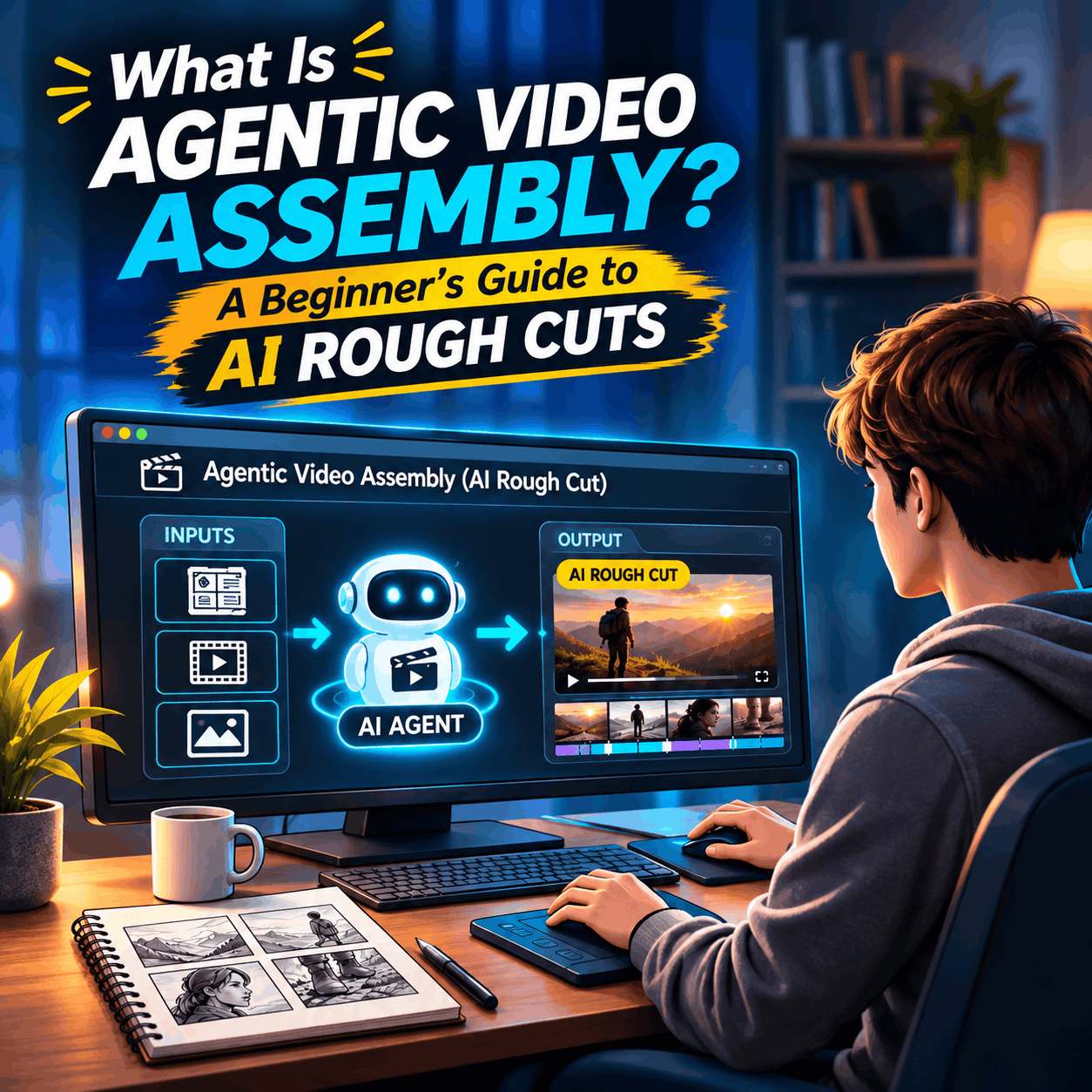
Agentic video assembly is the process of giving an AI agent your raw footage and creative direction so it can review the material and carry out editing work directly on an editable timeline. Instead of manually scrubbing through hours of clips to find usable takes, you describe what you want the video to cover, and the agent builds a first cut for you to refine.
For anyone who has sat through a pile of raw footage trying to find the three good takes buried in twenty mediocre ones, this changes what the first hour of editing actually looks like. The agent does the sorting and assembling. You direct the result and handle the creative decisions that actually need a human.
A rough cut is the first assembled version of a video, built from raw footage before any fine-tuning, color work, or polish. It exists to answer a basic question: does the footage you have actually tell the story you want, in roughly the right order and length? Getting to that version faster means you spend less time on mechanical selection and more time on whether the edit actually works.
This is the core idea behind invideo’s Rough Cut Editing tool. You upload your footage, give the agent direction in plain language, and it reviews the on-screen action, delivery, and dialogue to remove unusable material and select the strongest takes. The result lands on your timeline as a starting point you can keep refining, not a finished product you’re stuck with.
The process starts with bringing your assets into a project. You can upload footage from one or more cameras along with dialogue, voice recordings, music, and other audio, and you can start with footage you’ve already organized into selects or hand the agent a larger, unsorted batch of raw material to review.
From there, you give the agent your creative direction. This is the part that actually shapes the result, so it’s worth being specific. You can ask it to build a base cut, select the best takes from repeated attempts at the same line, follow a particular story structure, sync multiple camera angles, edit to a music track, or build a version aimed at a specific platform. The agent reviews the footage against that direction and assembles a sequence accordingly.
Once the cut is assembled, you review it on the timeline. You can ask for changes conversationally, the same way you gave the original direction, or you can edit the clips, timing, audio, and effects yourself to take it the rest of the way.
One of the more tedious parts of any edit with multiple takes is figuring out which version of a line or moment actually works best. An agent handling rough cut editing can review repeated takes, remove unusable material like flubbed lines or dead air, and select the strongest complete version of each moment based on the direction you give it.
This is particularly useful for interviews and podcasts, where getting to a clean first cut faster means selecting complete answers, removing unusable takes, and arranging the conversation around the specific points you want to cover, rather than listening through every recorded minute yourself.
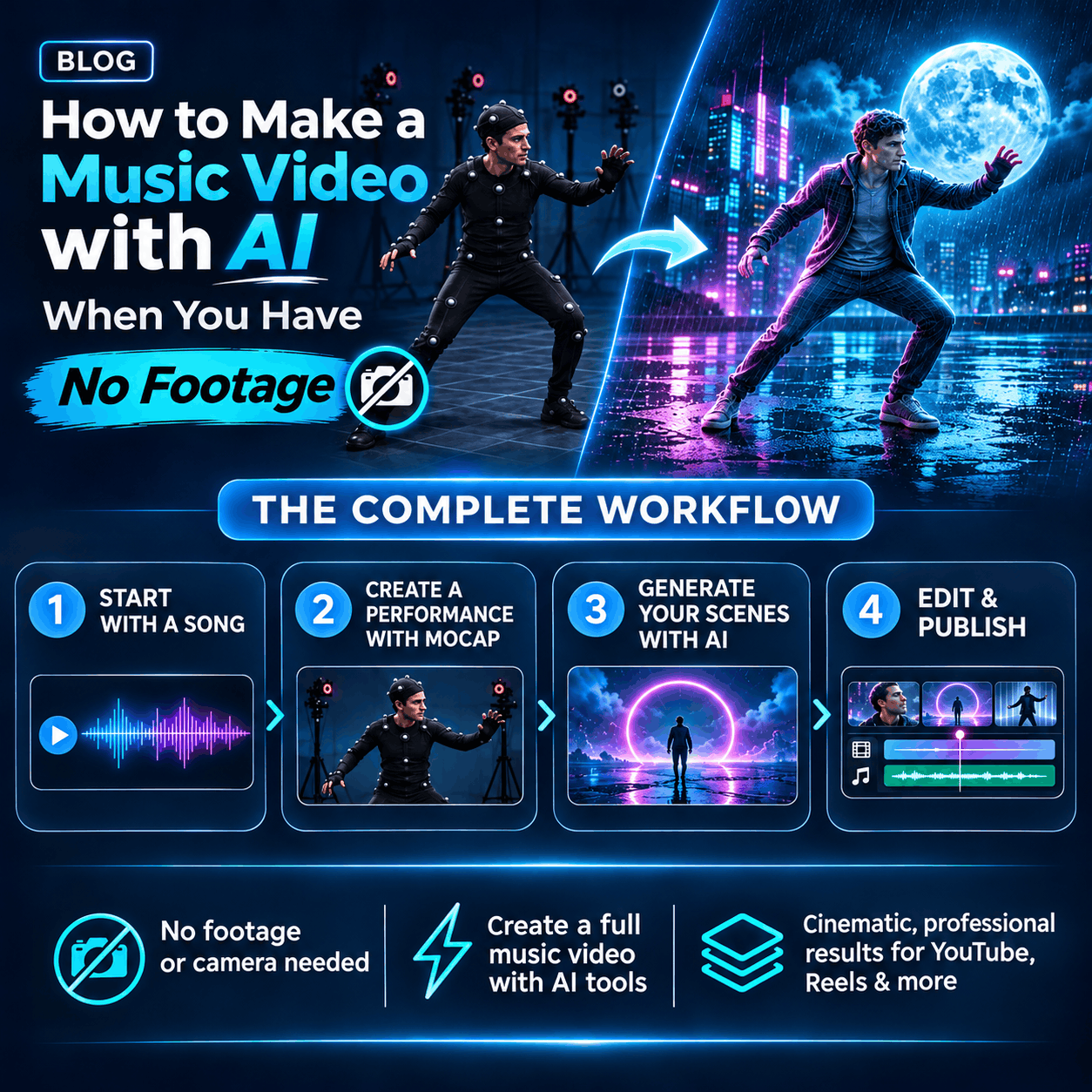
Rough cuts aren’t limited to dialogue-driven footage. You can give the agent a music track, a voice recording, or a beat pattern to work with, and it arranges the footage around that audio, timing cuts to the rhythm and building the sequence to match the pace you’re after. This works well for music, sports, and event edits, where large volumes of footage need to turn into an energetic sequence arranged around a track or an important recurring beat.
A rough cut rarely needs to stay in its first form. You can ask for a faster opening, a shorter middle section, or a different sequence of events entirely, and the agent reorganizes the clips and adjusts pacing while preserving the context viewers need to follow along. You can also ask it to cut the video down to a specific target duration without losing what matters.
This extends to creating entirely new versions from an existing edit. A finished project can become a trailer, a highlight reel, a social cut, or a platform-specific version just by telling the agent the format, the duration, and which moments to prioritize. Instead of starting a new edit from scratch for every output you need, you’re reshaping one assembled sequence into several.
Agentic assembly handles the grunt work, not the entire creative decision. The agent can clean up dialogue, add sound effects, balance different audio elements, and master the final soundtrack if you ask it to, but the direction behind all of that still comes from you. Every result lands on an editable timeline where you can inspect and adjust the clips, timing, audio, and other elements, so the agent’s cut is a starting point rather than a locked-in final.
The quality of a rough cut depends heavily on how clear your direction is going in. Vague instructions like “make something good” leave too much open to interpretation. Specific direction, naming the story you want, the pacing you’re after, which footage to prioritize, and any audio it should sync to, gives the agent a much clearer target and usually means fewer rounds of revision before the cut feels right.
What is agentic video assembly?
It means giving an AI agent footage and creative direction so it can review the material and carry out editing work directly on an editable timeline, rather than assembling a cut manually yourself.
Can the agent choose the best takes from raw footage?
Yes. It can review repeated takes, remove unusable material, and select the strongest complete version of each line or moment based on your direction.
Can a rough cut be built around music?
Yes. Giving the agent a music track or beat pattern lets it arrange footage and time cuts around that audio to match the pace you want.
Can I turn an existing cut into a shorter version?
Yes. You can ask for trailers, highlights, social cuts, or platform-specific versions built from an existing project by specifying the format, duration, and moments to prioritize.
Do I lose editing control once the rough cut is built?
No. The result lands on an editable timeline, so you can review it, ask for conversational changes, or adjust the clips, timing, and audio yourself.