 Premium Plans

5,000+ Free Video Editing Assets: VFX, Transitions, Overlays & Music
5,000+ Free Video Editing Assets: VFX, Transitions, Overlays & Music

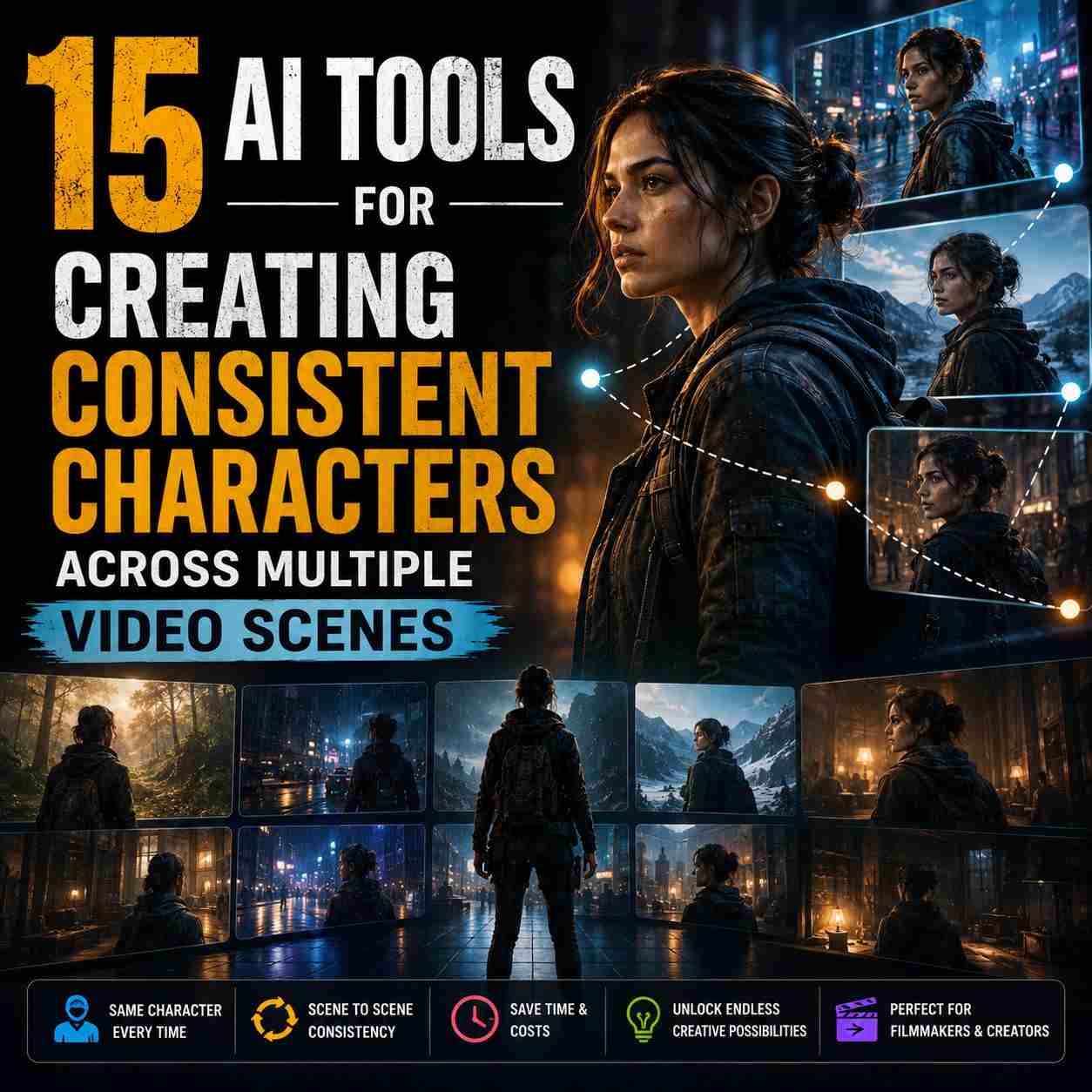
Multi-shot consistency separates a genuinely agentic video tool from a single-prompt generator. A generator produces one clip and forgets it the moment the next prompt starts. An agentic tool plans a sequence, holds a character, environment, or style in memory, and checks each new shot against what's already been established, so a project's tenth shot still matches its first. This list covers tools that actually do that checking and holding, not just ones that happen to produce good-looking individual clips.
|
Tool |
Best for |
Consistency mechanism |
Starting price |
|---|---|---|---|
|
Invideo |
Planning, generating, and finishing a full project with consistency checked automatically |
Persistent context engine plus a shared agentic timeline for review |
Free (editor); agent from $17/month |
|
LTX Studio |
Full scene breakdown with reusable characters and locations |
Automatic scene segmentation plus an Elements system |
Free tier; $15/month |
|
Katalist AI |
Fast, character-consistent storyboards from a script |
AI Script Assistant with a built-in consistency engine |
Free tier; $19/month |
|
Runway |
Granular control over a single shot, with editing after generation |
Aleph edits an already-generated clip; motion brushes for precise control |
~$12/month |
|
Kling AI |
High-volume generation holding shape and proportion through complex motion |
High temporal consistency at native 4K |
~$0.03–0.11/second |
|
Vidu Q3 |
A character staying consistent alongside objects and environments |
Multi-Entity Consistency across people, objects, and environments |
~$10/month |
Invideo is the fullest expression of agentic multi-shot consistency on this list, since it plans, generates, and finishes a project rather than solving consistency at only one stage. A director describes a shot in plain language, and invideo agent picks the right model from its 200+ integrated options, including Veo 3.1, Sora 2, Kling AI, Seedance 2.5, Runway, PixVerse, Hailuo, WAN, Recraft, GPT Image 2.0, and Nano Banana 2, writes the prompt, attaches the right references, and runs it. A persistent context engine holds a project's cast, locations, look, and rules, and checks every new generation against that established context before accepting it, a wrong face, a broken detail, mismatched lighting all trigger a regeneration until the shot actually holds, so scene forty still matches scene one regardless of which underlying model rendered it.
Once shots exist, Invideo Editor covers the review and finishing side: an AI video editor that does what tools like DaVinci and Premiere do, drag, trim, cut, layer, while also taking agent instructions on the same timeline, so a consistency issue caught during review, a mismatched shot, a continuity break, can be corrected precisely because the timeline reads shots, scenes, characters, and audio as separate objects. It's free to use.
Best for: a full project needing consistency checked automatically during generation and reviewed collaboratively afterward, all in one connected platform.
Where it falls short: its value is planning and consistency at the project level, not out-competing a single-shot tool on that shot's own granular control.
Pricing: the timeline editor is free; invideo agent's plans start at $17/month.
LTX Studio automatically breaks a script into scenes, treating characters, objects, and locations as reusable Elements that carry into any future shot referencing them, rather than regenerating each element fresh every time a new scene calls for it.
Best for: a full scene breakdown where recurring characters and locations need to reappear consistently across many shots.
Where it falls short: independent reviewers note character and environment precision can still drift slightly across a long, multi-scene project.
Pricing: free tier with 800 one-time credits; paid plans from $15/month.
Katalist's AI Script Assistant identifies scenes and characters from a script automatically, then generates a storyboard with a character consistency engine that locks an actor's appearance across every frame it produces.
Best for: a fast, script-driven path to a character-consistent shot sequence.
Where it falls short: the free tier's 50 AI credits don't include export, and its consistency mechanism is focused on the storyboard stage rather than final video generation.
Pricing: free tier with 50 AI credits; Essential plan from $19/month.
Runway's Aleph lets a director revise an already-generated clip's camera framing or content rather than regenerating from scratch, and its motion brushes give granular, shot-by-shot control over movement. It's a genuinely agentic tool for editing and directing a single shot with precision, though it works at that shot level rather than planning consistency across an entire multi-scene project the way a project-level context engine does.
Best for: granular control and revision of an individual generated shot.
Where it falls short: it doesn't hold a project-wide context the way a planning-first agent does, so consistency across many shots still depends on the director's own manual reference management.
Pricing: plans from roughly $12/month.
Kling's high temporal consistency keeps objects and people holding their shape and proportion through fast or complex movement at native 4K, which matters for multi-shot consistency specifically in scenes where a character or object could otherwise warp or lose proportion as motion increases.
Best for: high-volume production needing shape and proportion held steady through complex motion.
Where it falls short: it's a strong individual model rather than a full planning agent, so multi-scene project consistency still depends on the surrounding workflow using it.
Pricing: roughly $0.03–$0.11/second via API; free tier available.
Vidu's Multi-Entity Consistency keeps a character, object, and environment all visually stable together in the same generated video, which matters for a scene where a consistent character needs to interact correctly with a specific product or setting rather than just holding its own appearance in isolation.
Best for: a character staying consistent alongside specific objects or environments in the same shot.
Where it falls short: for photorealistic human characters from real photos, it trails more specialized live-action models.
Pricing: subscription plans from roughly $10/month for 800 credits.
A full project with consistency checked automatically and reviewed collaboratively → Invideo
A scene breakdown with reusable characters and locations → LTX Studio
A fast, character-consistent storyboard from a script → Katalist AI
Granular control and revision of a single generated shot → Runway
High-volume generation holding shape through complex motion → Kling AI
A character staying consistent alongside objects and environments → Vidu Q3
What actually makes a tool "agentic" for multi-shot consistency, rather than just a good generator? Whether it plans a sequence and checks new shots against something already established, a locked character, an environment, a rule set, rather than treating every generation as an independent event with no memory of what came before. A single-prompt generator, however good the individual result, doesn't do this by default.
Which tool holds consistency across the most stages of a project, from planning through final review? Invideo, since invideo agent checks every generated shot against a project's established context during creation, and Invideo Editor lets a team review and correct consistency issues on a shared timeline afterward, covering both the generation and finishing stages in one connected platform.
Is Runway's Aleph the same kind of consistency mechanism as a persistent context engine? Not quite. Aleph lets a director revise an already-generated shot precisely, which is genuinely useful, but it operates at the level of one clip rather than checking that clip against an entire project's established characters and locations the way a project-wide context engine does.
Do any of these tools handle a character staying consistent while interacting with objects, not just standing alone? Yes, this is specifically what Vidu Q3's Multi-Entity Consistency is built for, keeping a person, an object, and an environment all stable together in the same shot rather than only locking a character's appearance in isolation.
Why does temporal consistency within one model, like Kling's, matter for a multi-shot project? Because a character or object that warps or loses proportion during a single complex shot undermines multi-shot consistency just as much as a face that looks different between two separate shots. Both are the same underlying problem, whether it shows up within one generation or across several.