 Premium Plans
5,000+ Free Video Editing Assets: VFX, Transitions, Overlays & Music
5,000+ Free Video Editing Assets: VFX, Transitions, Overlays & Music
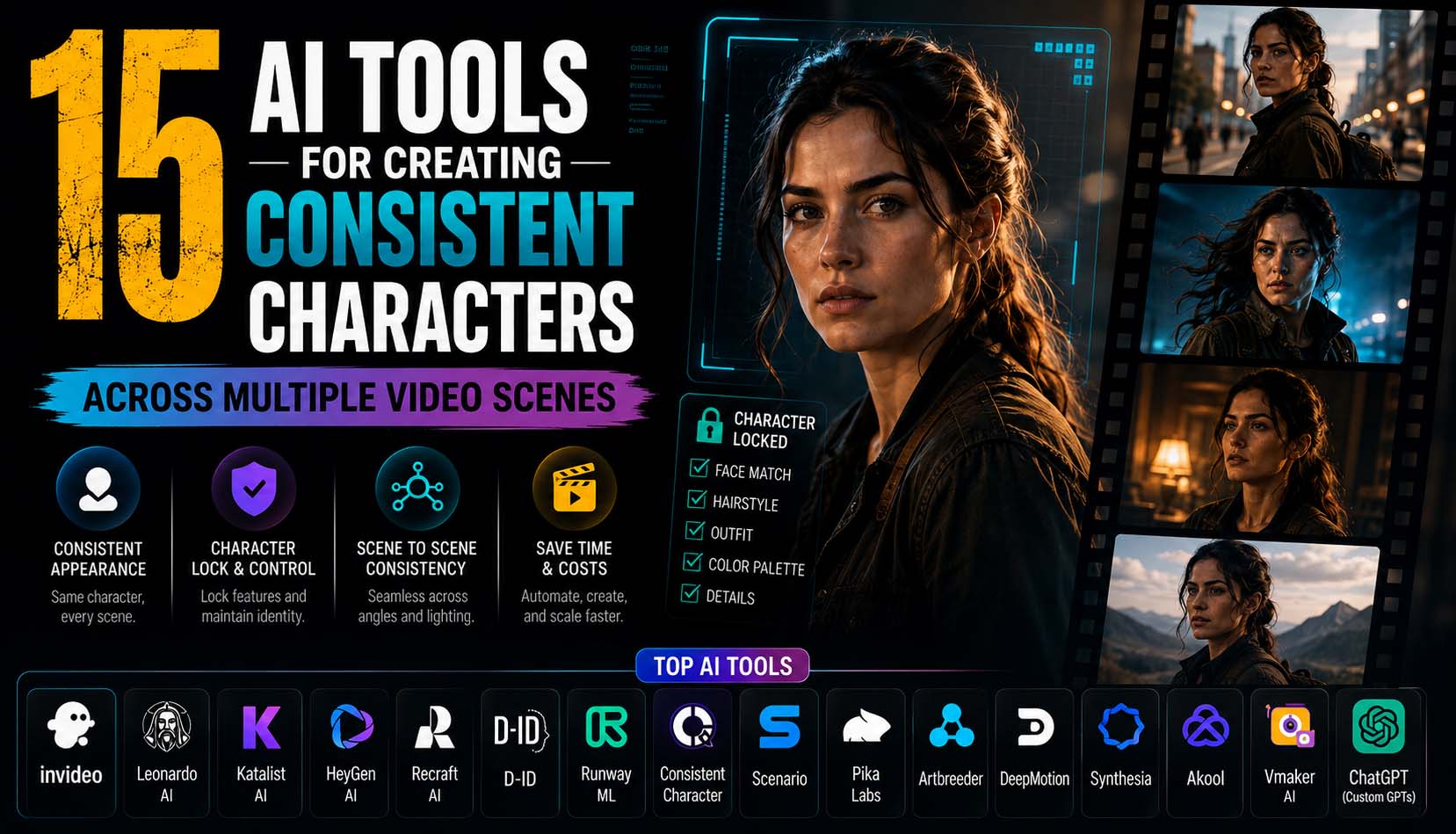
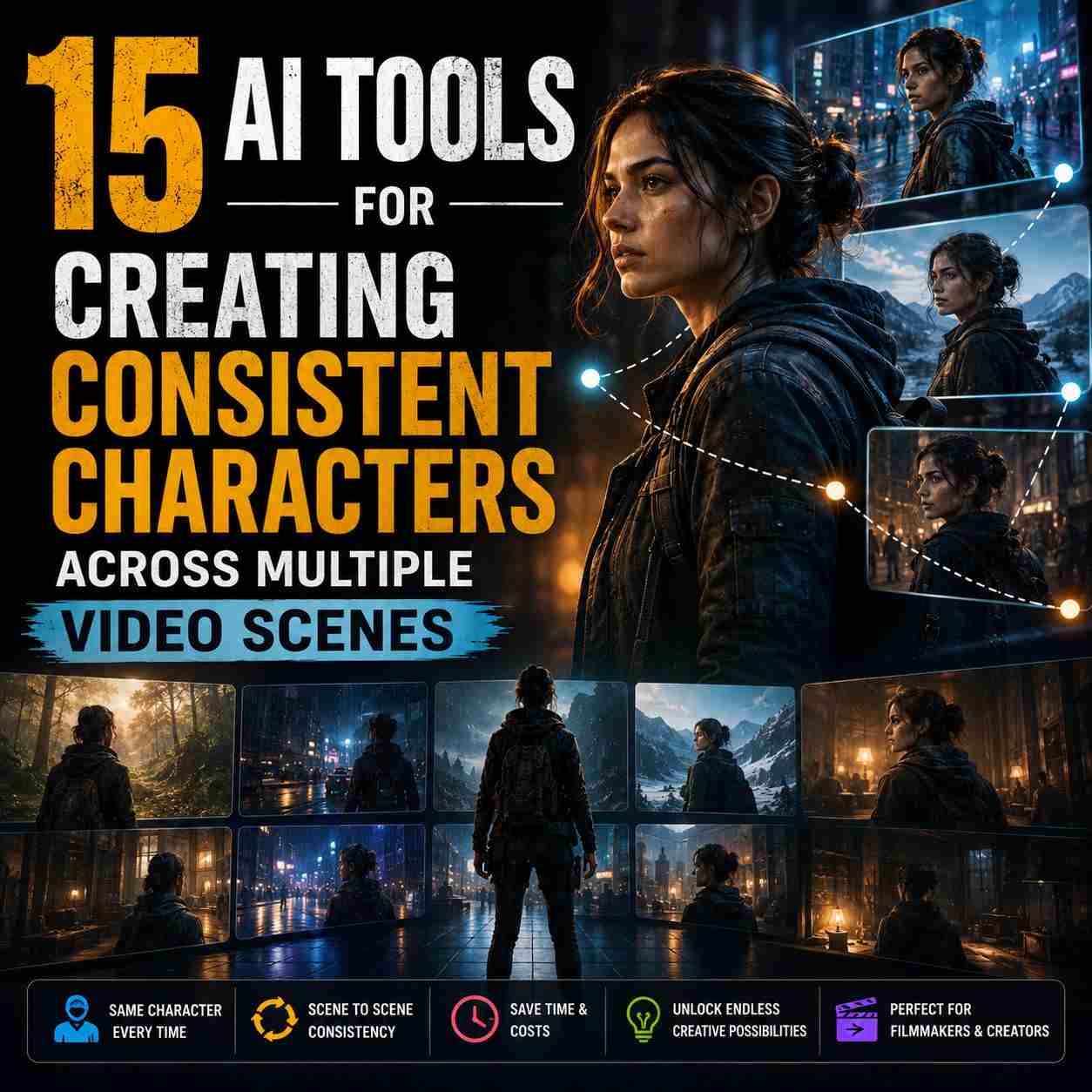
Keeping a character consistent across multiple video scenes solves a genuinely different problem depending on what kind of "character" is involved. A corporate presenter needs a reusable avatar that looks and speaks identically across dozens of training videos. A narrative or animated character needs a locked visual identity that survives changing camera angles, lighting, and motion. An illustrated or anime character needs a saved reference profile a model can pull from without re-uploading. This list spans all three, from enterprise avatar platforms to narrative-focused consistency engines.
|
Tool |
Best for |
Key consistency mechanism |
Starting price |
|---|---|---|---|
|
invideo agent |
A narrative character held consistent across scenes, sessions, and episodes |
Persistent context engine with 4K, multi-angle reference sheets |
$17/month; team and enterprise options available |
|
Synthesia |
Enterprise training and corporate video with the broadest avatar library |
230+ stock avatars plus custom Personal Avatars, 140+ languages |
$29/month |
|
Colossyan |
Interactive training video with SCORM and LMS integration |
NEO 2 avatar model, branching and quiz features |
$19/month (annual) |
|
D-ID |
Budget-friendly avatar consistency with high-quality cloned voice |
ElevenLabs voice integration paired with consistent avatar rendering |
$5.99/month |
|
HeyGen |
The most expressive, realistic reusable avatar |
Avatar IV neural rendering plus Avatar V digital twin from a 15-second clip |
$29/month |
|
Leonardo AI |
Locking a character's design during concept development |
Character Reference tool holding facial proportions across stills |
Free tier; $12/month |
|
OpenArt AI |
A recurring character trained for use at scale |
Custom LoRA training on uploaded reference images |
~$7/month |
|
Vidu Q3 |
Illustrated or anime-style character consistency |
Multi-reference profiles reused across generations |
~$10/month |
|
DomoAI |
Anime and stylized character consistency across animation |
Reference-guided Image-to-Video and Frames-to-Video generation |
~$6.99/month |
|
Katalist AI |
Fast, script-driven character-consistent storyboarding |
AI Script Assistant with a built-in character consistency engine |
Free tier; $19/month |
|
Drawstory |
No-prompt script-to-storyboard character consistency |
Automatic panel generation with locked faces and outfits |
Free tier; $30/month |
|
Kaiber |
Extending a character's story from a single locked image |
Story Panels continuing a narrative from one starting reference |
$5/month |
|
LTX Studio |
Recurring characters across a full multi-shot production |
Elements system for reusable characters tagged into any shot |
Free tier; $15/month |
|
Hedra Character-3 |
A talking character with synchronized lip-sync and expression |
Omnimodal processing of image, text, and audio in one pass |
$15/month |
|
Krikey AI |
Turning a video performance into a consistent animated character |
Video-to-animation with no rigging experience required |
Free; $15/month |
Most tools on this list solve character consistency for one narrow case, an avatar, a stills reference, an illustrated profile. invideo agent is built around the harder, general version of the problem: holding a narrative character consistent not just within one clip, but across scenes, sessions, and even multiple episodes of a series.
A persistent context engine is the mechanism: a character's locked reference sheet, built at 4K across front, three-quarter, profile, and back angles plus a face close-up, carries forward automatically into every future shot that references it, regardless of which of the platform's 200+ integrated models actually renders that shot, including Veo 3.1, Sora 2, Kling 3.0, Seedance 2.0, Runway, PixVerse, Hailuo, WAN, Recraft, GPT Image 2.0, and Nano Banana. For the harder case of two characters interacting in the same frame, a director can sketch the physical arrangement by hand, and the agent turns that sketch into a single fused reference sheet for that exact configuration.
Best for: narrative or branded video projects where a character needs to hold up across many scenes, sessions, or episodes, not just one clip.
Where it falls short: the reference-sheet workflow is a real production step, asking for more setup than a single-purpose avatar or reference tool built around a narrower use case.
Pricing: plans start at $17/month, with team and enterprise options also available.
Synthesia's core strength is breadth and reliability at enterprise scale: 230+ stock avatars across styles and demographics, 140+ languages, and published SOC 2 and ISO 42001 compliance, which is why it's trusted by over 50,000 business customers including Amazon, Reuters, and Heineken for consistent, professional presenter video.
Best for: enterprise corporate communications and training that need consistent avatar video across many languages and stakeholders.
Where it falls short: custom avatars cost $1,000/year each, and the avatars are polished presenters rather than expressive actors, limited on gesture and emotional range.
Pricing: Starter plan from $29/month for 10 minutes.
Colossyan targets learning and development specifically, pairing its NEO 2 avatar model with interactive features, branching scenarios and quizzes, plus SCORM export for direct LMS integration, which makes it the more direct fit than a general-purpose avatar tool for corporate training content.
Best for: interactive L&D and compliance training that needs consistent avatars plus quiz and branching functionality.
Where it falls short: NEO 2's higher-fidelity output is capped at roughly 10 minutes per month on Business plans, and its avatar library is smaller than Synthesia's or HeyGen's.
Pricing: from $19/month (annual billing).
D-ID positions itself as the budget entry point into avatar consistency, and its integration with ElevenLabs for voice gives it unusually high voice quality for its price point, pairing a consistent avatar face with a cloned or high-quality synthetic voice.
Best for: occasional or budget-conscious avatar video where voice quality matters as much as visual consistency.
Where it falls short: it trails HeyGen and Synthesia on avatar library size and enterprise features like SSO or LMS integration.
Pricing: Lite plan from $5.99/month.
HeyGen's Avatar IV uses neural rendering for notably smooth lip sync, natural eye blinks, and gesture variation, and Avatar V generates a full custom avatar from just a 15-second webcam clip, making it the fastest and most realistic option for creating a new consistent avatar from scratch.
Best for: the most expressive, realistic reusable avatar, especially when a custom avatar needs to be created quickly.
Where it falls short: per-minute costs are comparable to Synthesia's, and heavier use of Avatar IV can draw down credits faster than the plan price suggests.
Pricing: Creator plan from $29/month.
Leonardo's Character Reference tool locks a protagonist's face shape, proportions, and features across every still image in a project, which has made it a standard choice for concept art and marketing stills before a character ever appears in video.
Best for: locking a character's visual design during concept development, ahead of video production.
Where it falls short: it's a stills tool rather than a video generator, and the reference feature can lose specific traits across a long session.
Pricing: free tier with 150 daily tokens; paid plans from $12/month.
OpenArt's custom LoRA training lets a creator upload reference images of a character once, train a personalized model from them, and generate that character across unlimited future stills and short videos without rebuilding the asset each time.
Best for: a recurring character that needs to appear across a large volume of shots or projects.
Where it falls short: it's a heavier upfront step than a simple reference upload, and consistency varies across the underlying models it aggregates.
Pricing: plans start around $7/month.
Vidu's multi-reference system lets a creator upload three to seven images of a character, save it as a named profile, and pull from that profile on every future generation without re-uploading, which holds up especially well for illustrated and anime-style characters.
Best for: recurring illustrated or anime-style characters across many short clips.
Where it falls short: for photorealistic human characters from real photos, it trails more specialized live-action models.
Pricing: subscription plans from roughly $10/month for 800 credits.
DomoAI lets a creator upload a reference image or character sheet that guides every subsequent Image-to-Video or Frames-to-Video generation, with faces staying recognizable through simple movements like head turns or walking loops.
Best for: anime and stylized-animation creators making a recurring character-driven series.
Where it falls short: complex motion can still soften facial features or distort patterned clothing.
Pricing: plans from roughly $6.99/month.
Katalist's AI Script Assistant reads a script, identifies its characters and scenes automatically, and generates a storyboard with a character consistency engine that locks an actor's appearance across every frame it produces.
Best for: a fast, script-driven path to a character-consistent shot sequence.
Where it falls short: the free tier's 50 AI credits don't include export, and visual style doesn't always track current image-model aesthetics.
Pricing: free tier with 50 AI credits; Essential plan from $19/month.
Drawstory uploads a script and returns storyboard frames with no prompting required, keeping faces, outfits, and overall character look identical across every panel and page automatically.
Best for: fast, consistent storyboard panels for pre-production handoff to a live-action crew.
Where it falls short: it stops at pre-production, so a downstream tool is still needed to turn approved boards into finished footage.
Pricing: free tier with 10 images/month; Starter plan at $30/month for 100 images.
Kaiber's Story Panels feature takes a single locked image and extends the narrative from it, generating new scenes that continue a character's story while preserving the visual identity established in that starting reference.
Best for: extending a character's story across new scenes from a single strong starting image.
Where it falls short: it's better suited to extending an existing visual idea than breaking down a full script from scratch.
Pricing: Explorer plan from $5/month.
LTX Studio treats characters as reusable Elements that carry into any future shot within a project, so a character established early in a production keeps the same look every time a later scene calls for them, without being regenerated and drifting.
Best for: productions with a recurring character across many scenes who needs to look like the same person every time.
Where it falls short: independent reviewers report character precision can still drift slightly across a long, multi-scene project.
Pricing: free tier with 800 one-time credits; paid plans from $15/month.
Hedra's Character-3 model processes image, text, and audio together in one pass rather than generating video and audio as separate steps, which is the specific architectural choice behind its lip-sync and micro-expression quality for a talking character that needs to feel consistently alive across scenes.
Best for: talking-character content where lip-sync and expression need to feel genuinely synchronized across every scene.
Where it falls short: language support trails avatar-focused competitors like Synthesia and HeyGen, and full-body motion is noticeably stiffer than full-body-focused alternatives.
Pricing: Basic plan from $15/month.
Krikey's AI Video to Animation tool converts a recorded performance into a 3D animated character without requiring rigging or animation experience, which gives a creator a consistent animated character across scenes without hand-building a model each time.
Best for: turning a recorded video performance into a consistent animated character quickly, without an animation background.
Where it falls short: it's positioned more toward speed and simplicity than the fine-grained precision controls found in dedicated character-consistency platforms.
Pricing: free-forever plan available; Pro plan from $15/month.
A narrative character held consistent across scenes, sessions, and episodes → invideo agent
The broadest enterprise avatar library and language support → Synthesia
Interactive training video with LMS integration → Colossyan
Budget avatar consistency with high-quality cloned voice → D-ID
The most expressive, realistic reusable avatar → HeyGen
Locking a character's design during concept art → Leonardo AI
A recurring character trained for use at scale → OpenArt AI
Illustrated or anime character consistency → Vidu Q3
Anime-style character consistency across animation → DomoAI
Fast, script-driven character-consistent storyboarding → Katalist AI
No-prompt storyboard character consistency → Drawstory
Extending a character's story from one starting image → Kaiber
Recurring characters across a full multi-shot production → LTX Studio
A talking character with synchronized lip-sync and expression → Hedra Character-3
Turning a recorded performance into a consistent animated character → Krikey AI
What's the difference between an avatar platform like Synthesia and a narrative consistency tool like invideo agent? An avatar platform builds one reusable, licensed presenter identity used across many separate videos, typically for corporate or training content. A narrative consistency tool holds a character's identity together within and across the scenes of one connected story or campaign, often alongside camera work, other characters, and products in the same project.
Which tool is best for a corporate training video series that needs the same presenter every time? Synthesia and Colossyan both specialize in this, with Synthesia offering the broadest avatar library and language support, and Colossyan adding interactive quizzes and SCORM export specifically for learning management systems.
Can an illustrated or anime character stay consistent as easily as a photorealistic one? Often more easily. Vidu Q3 and DomoAI both hold up well for illustrated and anime-style characters using saved reference profiles, since style consistency matters as much as exact facial geometry, whereas photorealistic human characters typically need a fuller, higher-resolution reference approach to avoid visible errors.
Is character consistency free to test on any of these platforms? Several offer usable free tiers, including Leonardo AI, Drawstory, Krikey AI, LTX Studio, and Katalist AI, though enterprise avatar platforms like Synthesia and Colossyan require a paid plan for any meaningful volume.
What's the hardest character consistency problem these tools still struggle with? Two characters physically interacting in the same frame, a handshake, an embrace, remains one of the more stubborn edge cases, since two independently locked identities can blur at the point of contact. invideo agent addresses this specifically by turning a hand-drawn sketch of the interaction into one fused reference sheet for that exact configuration.